
Root Diseases: Phytophthora Root Rot
Introduction Phytophthora root rot is one of the most significant root diseases of woody ornamentals, and herbaceous plants. It is caused by a multitude of fungus-like organisms, which infect susceptible…

Introduction Phytophthora root rot is one of the most significant root diseases of woody ornamentals, and herbaceous plants. It is caused by a multitude of fungus-like organisms, which infect susceptible…

Black knot (Apiosporina morbosa) is a fungal disease that infects over 25 species of Prunus. It is caused by the fungus Apiosporina morbosa. Outbreaks of black knot may occur in…

Introduction Black spot of rose is one of the most widespread plant diseases around the world. The disease is caused by the fungus Diplocarpon rosae. Black spot infections seldom kill…

Introduction Black rot of apple, also called frogeye leaf spot, is a fungal disease that infects the fruit, leaves, and bark of various hardwood trees, including apple, pear, and quince.…

Introduction Pine needle scale (Chionaspis pinifoliae), also referred to as white scale, is a tiny armored insect that infests various species of pine. The insect is notable for the distinct…

Introduction White pine blister rust is a fungal disease of white pine. It is caused by the fungus, Cronartium ribicola. The disease pathogen is native to Asia. It was inadvertantly…
Introduction Elytroderma needle cast, also known as Elytroderma disease, is a fungal disease of pine trees. It is especially common on ponderosa pine. Elytroderma needle cast is caused by the…
Introduction Dothistroma needle blight, often referred to as red band disease in the western United States, is a devastating foliar disease of pines. The causal agent of the disease is…
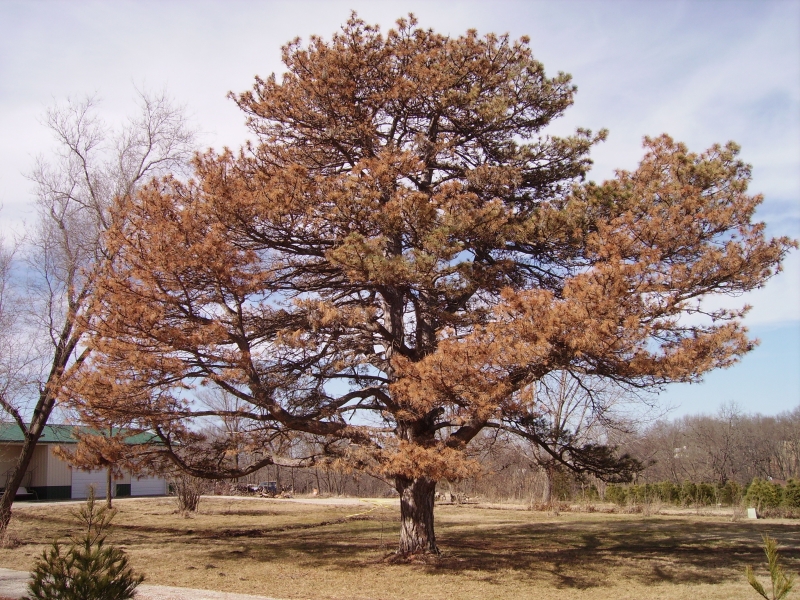
Introduction Pine wilt disease is an affliction of pine caused by the pine wood nematode, Bursaphelenchus xylophilus. The pine wood nematode is a microscopic parasite. It is transmitted to susceptible…

Introduction Pine needle rust is a fungal disease that affects many species of pine. The disease is caused by over twenty species of Coleosporium fungi. Coleosporium asterum is the most…